

How to Choose the Right Pajama Set: Fabric, Fit, and Season Guide
The best pajamas are made from breathable natural fabric like cotton, cut loose enough that nothing digs in when you lie down, and matched to the temperature of the room you actually sleep in — not the season on the calendar. Get those three things right and the print is genuinely just decoration.
We'll admit something a little embarrassing: somewhere in every household there's one pair of pajamas everyone still owns purely out of guilt — bought on sale, one size too small, with a waistband that starts a slow, quiet war with your stomach at 2 a.m. every single night. You know the pair. This guide exists so you stop buying that pair by accident.

Photo by cottonbro studio via Pexels
Start With the Fabric, Not the Print
The print is the fun part, but the fabric decides whether you'll actually reach for the set on a random Tuesday.
- Cotton is the reliable, breathable default — soft against skin, machine-washable without drama, forgiving in both warm and cool rooms. It's the fabric doing the heavy lifting in our Sweetheart Cotton Pajama Set and Summer Breeze Cotton Pajama Set.
- Flannel is the cold-weather specialist — thicker, warmer, and the closest thing to wearable blanket, which is exactly the point if your bedroom runs cold in winter.
- Silk is the temperature-regulating luxury option, prized for reducing friction against skin and feeling cool to the touch, though it demands gentler washing than cotton.
- Modal and bamboo trade on moisture-wicking softness — a strong pick if you deal with night sweats and want something that still feels substantial.
- Kimono-style cuts aren't a separate fabric, but they change how any fabric performs — a looser, robe-like drape that's cooler against skin and easier to move in. Our Soft Breeze Kimono Pajama Set and Zen Cotton Kimono Pajama Set both use this cut.
Printed cotton sets — florals, botanicals, novelty prints like our Ginkgo Garden Cotton Pajama Set or Peachy Breeze Pajama Set — perform identically to their solid-color counterparts. Pick these when you want personality without changing how the pajamas actually feel.
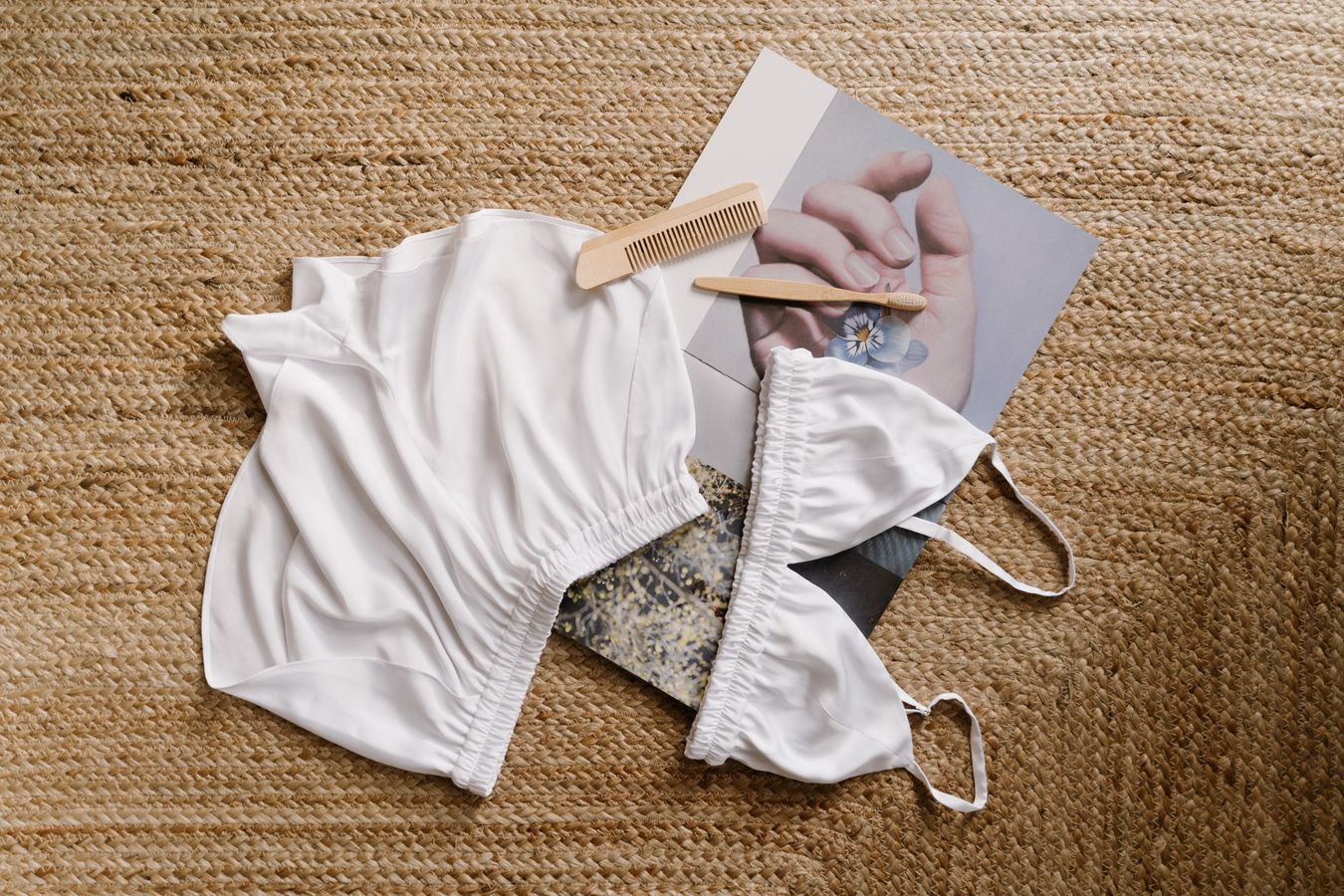
Photo by cottonbro studio via Pexels
Fit: Loose vs. Fitted (and Why the Waistband Matters Most)
Here's the one opinion in this whole guide we'll die on: pajama fit is not daywear fit. The goal isn't flattering, it's unrestricted. Anything that pulls at the shoulders or digs in at the waist when you're lying down — not standing, lying down — will wake you up over the course of the night whether you notice it happening or not.
- Loose styles give you room to twist and roll without tangling or bunching underneath you.
- Fitted styles stay in place better and won't ride up, which matters more for restless sleepers than it sounds.
- Waistbands should sit soft and elastic, never a rigid, dig-in band — this is the single most common complaint about badly fitting sleepwear, and the easiest one to check before you buy.
- Button-up tops, like our Cream Serenity Pajama Set, are forgiving to size slightly looser without looking sloppy, since the placket keeps the front closed regardless of fit.
If you're between sizes, size up for sleepwear specifically. This is one category where "true to size" is rarely the most comfortable choice.
Matching Pajamas to the Season (and How Hot You Actually Sleep)
Match the pajamas to how you sleep, not the date on the calendar:
- Hot sleepers: short-sleeve, short-length cotton in a lighter weave, paired with breathable bedding rather than heavy flannel.
- Cold sleepers: long-sleeve, full-length pieces in a slightly heavier weave, layered under a warmer duvet insert rather than relying on the pajamas alone.
- Runs hot early, cold by morning (a very common pattern): a kimono-style set is the reasonable middle ground — the looser fit vents heat early on without leaving you exposed later.
Reading the Label: What Fabric Weight Actually Tells You
Most pajama listings quote a fabric weight, sometimes in GSM (grams per square meter), and it's worth understanding before you buy online sight-unseen. Lower GSM (roughly 100–150) means a lighter, more breathable weave — ideal for summer or hot sleepers. Higher GSM (200+) means a thicker, warmer fabric — better for flannel-style winter pieces. It's the same logic as thread count on sheets: a useful data point, not the whole story, and worth checking alongside the fiber type rather than instead of it.
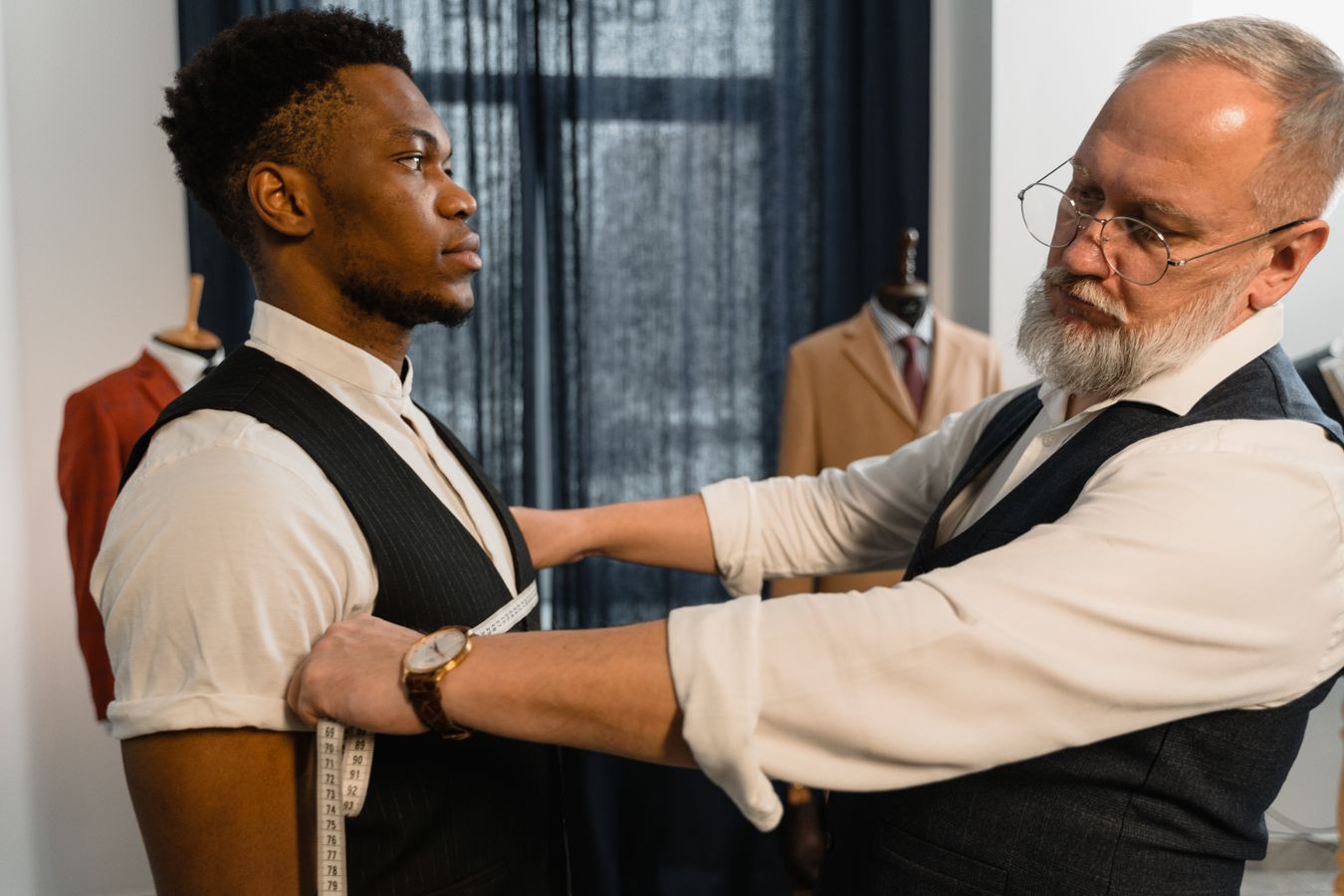
Photo by Tima Miroshnichenko via Pexels
Sizing Tips
Measure bust, waist, hip, and body length with an actual tape measure before you buy — pajama brands vary in sizing more than most daywear, since fit priorities differ so much between brands. Compare your numbers to the specific brand's size chart rather than assuming your usual size carries over. When your measurements land between two sizes, sizing up costs you nothing and saves you a return.

Photo by Pavel Danilyuk via Pexels
Matching Sets vs. Mixed Pieces
A matching set — same fabric and print, top and bottom — isn't just aesthetics. Both pieces are made to shrink, wash, and wear at the same rate, so you won't end up with a top and bottom that quietly stop matching after a few laundry cycles the way mixed separates from different sources sometimes do. If you like variety, rotating two or three matching sets (our Ginkgo Garden and Peachy Breeze sets pair well together) holds up better long-term than mixing pieces that were never designed as a pair.
Pairing Pajamas With Your Bedding System
This is the part most pajama guides skip entirely: your pajamas and your bedding are one temperature system, not two separate decisions. Lightweight cotton pajamas under a heavyweight winter duvet insert can leave you overheating by 3 a.m.; flannel pajamas under a lightweight summer insert can leave you reaching for an extra blanket. If you're rebuilding your sleep setup from scratch, match the two together — we cover the bedding half of that equation in our duvet insert vs. comforter guide.
Photo by Eren Li via Pexels
Photo by Francesco Paggiaro via Pexels
Caring for and Replacing Your Pajamas
- Wash in cool or warm water to protect print colors and elastic waistbands.
- Skip high heat in the dryer — it's the fastest way to degrade elastic and fade prints; tumble dry low or line dry instead.
- Rotate between two or three sets rather than wearing one on repeat, which meaningfully extends fabric and elastic life.
- Replace when the elastic stops bouncing back, the fabric thins to see-through in normal light, or pilling gets aggressive — cotton pajamas in regular rotation typically last one to two years before hitting that point.
FAQ
What are the best pajamas for hot sleepers?
Lightweight, short-sleeve cotton in a lower fabric weight, paired with breathable bedding rather than heavy flannel layers.
How often should I wash my pajamas?
After every one to two wears is standard — more often than sheets get touched directly, less often than daywear that picks up outside dirt and sweat.
Can the wrong pajamas actually affect sleep quality?
Yes — a tight waistband or restrictive cut causes micro-wakeups you may not consciously register, even if you don't remember waking up.
What pajama fabrics are best for sensitive skin?
Cotton and modal are the safest defaults — breathable, low-friction, and less likely to trap heat or moisture against skin overnight.
How do I know if my pajamas fit correctly?
Lie down in them before judging fit standing up — nothing should pull at the shoulders or dig in at the waist once you're actually in a sleeping position.
Are more expensive pajamas worth the money?
Usually only up to a point — fiber quality and construction matter more than price tier once you're past the cheapest synthetic blends.
Bottom Line
Start from fabric and temperature, not the print: cotton for reliable everyday wear, flannel for genuine cold, kimono-style for a looser, cooler drape — and always size toward comfort in a lying-down position, not a flattering one standing up. Browse the full Cotton Pajama Sets collection to find your next go-to set.